If you own one of the craftsman bungalows or California cottages in Glendora Village, the historic core of the city built mostly between the 1900s and 1930s, there is a good chance your home still carries some or all of its original galvanized steel supply piping. Galvanized pipe was the standard for residential water supply for the first half of the twentieth century, and it was built to last. The problem is that "built to last" meant a service life of roughly 40 to 70 years, and the galvanized lines in a Glendora Village bungalow are now 90 to 120 years old, well past the point where they perform the way they did when installed.
This post walks through how galvanized pipe fails, the specific signs that tell you a Glendora Village home has reached the repipe stage, and why the raised-foundation construction of these bungalows actually makes repiping less disruptive than it would be in a newer slab home. If you are weighing whether to keep patching or commit to a full whole-home repipe, understanding what is happening inside the pipe wall will help you make the call.
How galvanized pipe fails from the inside out
Galvanized steel pipe is steel coated with a layer of zinc to resist corrosion. For the first few decades, the zinc does its job. Over time, though, the zinc layer erodes, and once the bare steel underneath is exposed to water, it begins to corrode. The corrosion does not happen on the outside where you could see it. It happens on the inside of the pipe, where rust and mineral scale build up in layers that gradually narrow the interior diameter.
Picture a pipe that started with a three-quarter-inch interior opening slowly closing down to a quarter inch or less of usable space, with the rest filled by a rough crust of rust and scale. Water has to squeeze through that shrinking opening, which is why the first thing most homeowners notice is falling water pressure. The rough interior also sheds rust particles into the water, which is why the second common sign is discolored water. Glendora's moderately hard water, supplied by the City of Glendora Water Department at 150 to 220 ppm, adds mineral scale on top of the rust, accelerating the narrowing.
Five signs your Glendora Village bungalow needs a repipe
Galvanized failure is gradual, so the signs accumulate rather than appearing all at once. Here are the ones that matter most in a Glendora Village home:
1. Rust-colored or yellow-tinted water
Water that runs rusty or yellow, especially first thing in the morning or after the house has been empty for a few hours, is the clearest sign of galvanized corrosion. The discoloration comes from rust particles that settle in the pipe overnight and flush out when you first open a tap. If only the hot water is discolored, the issue may be concentrated in the water heater, but discoloration on both hot and cold points to the supply lines themselves.
2. Weak or falling water pressure
If your shower has lost force over the years, or running the kitchen tap noticeably drops the pressure in the bathroom, the narrowed interior of galvanized pipe is the likely cause. Pressure loss from galvanized buildup tends to be worse at fixtures farthest from the water main, since the water has traveled through more corroded pipe to get there.
3. Uneven hot and cold pressure
Hot water lines corrode faster than cold lines because heat accelerates the reaction. In a galvanized home, it is common to have decent cold pressure but weak hot pressure, a clue that the hot side has narrowed more severely.
4. Visible corrosion or staining at exposed pipes
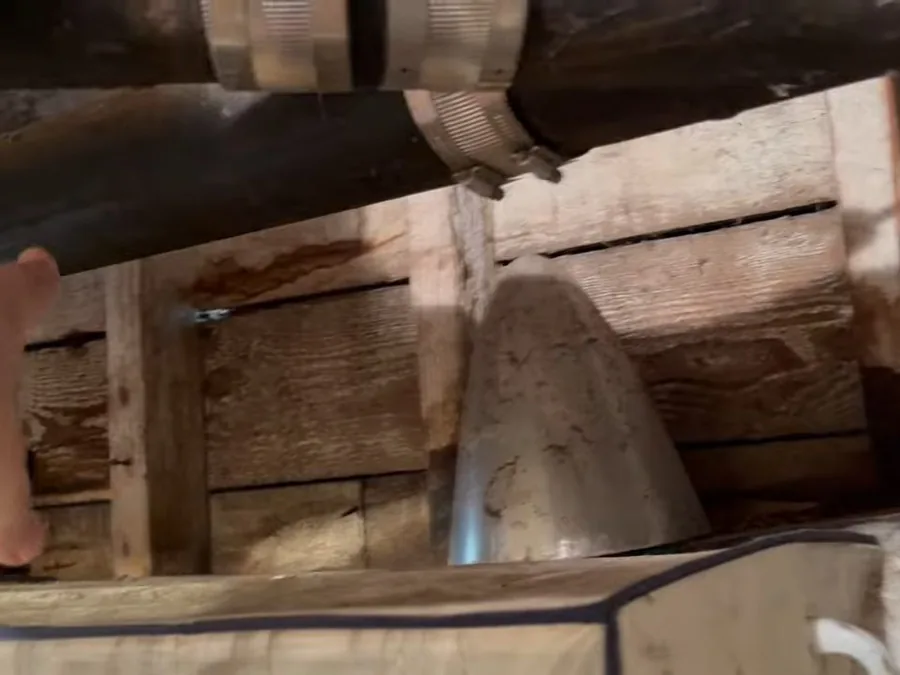
In the crawl space or where supply lines emerge at fixtures, look for rust-colored staining, white mineral crust at threaded joints, or pipe exteriors that look rough and flaky. Threaded connections corrode first, so staining at joints is an early indicator.
5. Recurring pinhole leaks
When galvanized pipe corrodes through completely, it produces small leaks at the weakest points, usually threaded joints. A first leak might be a one-off repair, but when you are repairing galvanized leaks every year or two, the pipe is telling you the whole system has reached the end of its life.
Why crawl-space access makes Glendora Village repiping easier
Here is the good news for Glendora Village homeowners. The craftsman bungalows in the Village were almost all built on raised foundations over crawl spaces, not on concrete slabs. That construction detail is a significant advantage when it comes time to repipe.
In a slab-on-grade home, the main supply distribution is often embedded in or routed under the concrete slab, which means repiping requires either cutting into the slab or rerouting lines up and over through walls and the attic, both of which add labor and wall repair. In a raised-foundation Village bungalow, the supply distribution runs through the accessible crawl space underneath the home. A plumber can run new PEX supply lines through that crawl space and bring them up to each fixture at the most accessible point, limiting wall cutting to small, targeted openings rather than opening long runs of wall.
This matters in Glendora Village specifically because these homes often have original features worth protecting: period wood trim, built-in cabinetry, plaster walls, and other craftsman details that are expensive or impossible to replace. Crawl-space repiping keeps the disruption to those finishes at a minimum. A careful repipe plan in a Village bungalow brings new lines up inside closets, cabinets, and other low-visibility spots wherever possible.
Should you repair or repipe?
A single galvanized leak can be spot-repaired, and if the rest of your system is still performing, that may be the right call for now. But galvanized pipe ages uniformly. When you are seeing multiple signs together, discolored water plus falling pressure plus a leak or two, the entire system has reached the same advanced stage, and continued spot repairs become a losing proposition. Each repair addresses one failure point while the rest of the system keeps closing down. A whole-home repipe in PEX restores full pressure, eliminates the rust at the source, and gives you a supply system with a service life measured in decades.
For a Glendora Village bungalow, the combination of advanced galvanized age and favorable crawl-space access usually tips the decision toward a full repipe once the signs are clear. The work requires a City of Glendora Community Development plumbing permit, and for homes in any locally designated historic area, exterior-affecting work may need additional review, both of which we handle as part of the project.
Get a Glendora Village repipe assessment
If your Glendora Village bungalow is showing the signs above, the next step is an assessment of your existing pipe material, foundation access, and the routing options for new lines. We provide free repipe estimates for Glendora Village homes, including a walkthrough of the crawl-space access and a minimal-disruption routing plan that protects your home's historic finishes. Learn more about our approach on our Glendora Village plumbing page or our whole-home repiping service.