Leak Detection in Glendora, CA | Find Hidden Leaks Before Opening Walls
Acoustic, electronic, and thermal imaging leak detection for Glendora homes · No demolition before locating · (626) 816-3170
Hidden leaks in Glendora's older housing stock
A supply line leak inside a finished wall in a Glendora home can run for weeks before it becomes visible at a surface. In Glendora Village's pre-war and early postwar raised-foundation homes, old galvanized pipe inside the walls develops pinhole corrosion similar to copper failures in newer homes. The difference is that galvanized pipe has often already been patching water into rust-colored sediment for years before a structural failure, so the first visible sign of a leak may be a soft spot in a plaster wall or a stain on a ceiling rather than the obvious spray or drip that signals an active copper failure.
In south Glendora's 1960s and 1970s slab homes, hidden leaks most often occur in copper supply lines running inside finished wall cavities, at supply line connections behind dishwashers and refrigerators, and at angle stop valves under sinks and toilets that have corroded at the packing nut. A slow drip from a corroded angle stop behind a bathroom cabinet can saturate the cabinet base and subfloor over months before the water bill spike triggers a call.
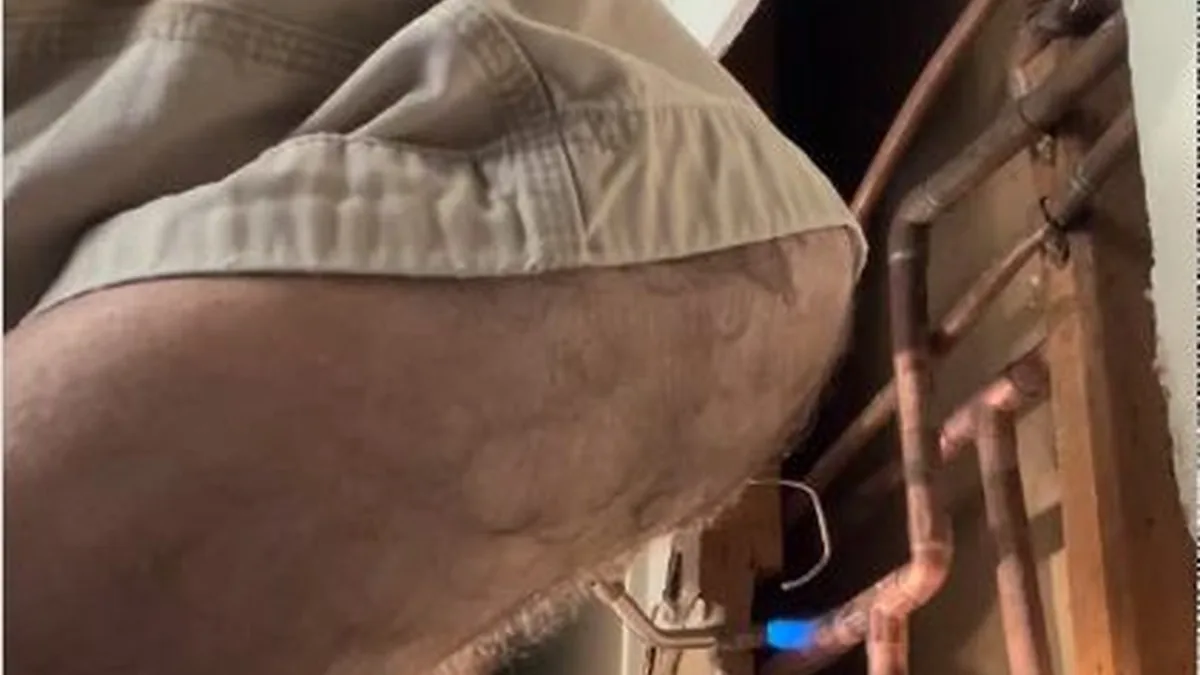
We use non-destructive detection first. Acoustic listening, thermal imaging, and electronic moisture metering let us locate a hidden leak to a specific wall section or pipe run before any drywall is opened. One precise access cut rather than opening large sections of finished wall on a guess.
How we find hidden leaks in Glendora homes
Acoustic listening and electronic moisture detection
The first step in any leak detection call is a meter test: we check whether the City of Glendora Water Department meter is spinning with all fixtures in the home shut off. A spinning meter with everything off confirms active water loss somewhere in the system. From there, acoustic listening devices amplify the sound of water escaping under pressure, allowing us to narrow the leak to a section of wall or ceiling. Electronic moisture meters then confirm elevated moisture content in the building materials on the other side of the finished surface, narrowing the search zone further before we open anything.
Thermal imaging for wall and ceiling leaks
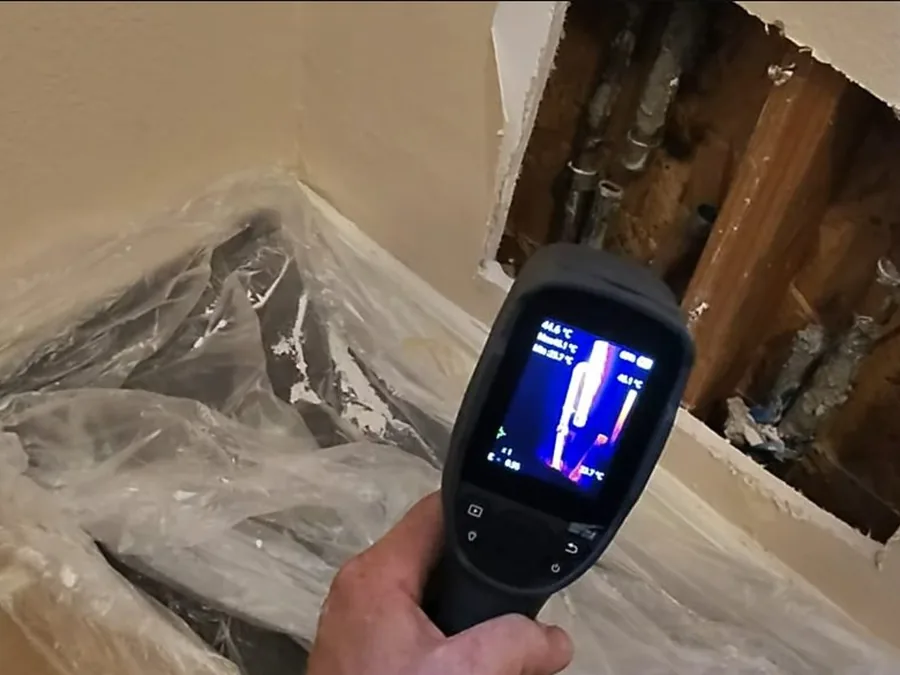
A thermal imaging camera detects temperature differences on wall and ceiling surfaces caused by water behind or inside the building material. A leaking pipe that has wetted the framing and drywall behind a finished wall produces a distinct cooler signature on the surface that shows up clearly in a thermal scan. In Glendora's older plaster-and-lath construction found in Glendora Village homes, thermal imaging is particularly useful because the denser wall assembly slows moisture migration, and the thermal differential often appears more distinctly than in modern drywall construction.
Pressure testing and zone isolation
For leaks where neither acoustic nor thermal detection isolates the source clearly, zone pressure testing helps identify which branch of the supply system is losing pressure. We close valves progressively to isolate the hot water, cold water, and individual fixture branches, then monitor pressure decay on each zone to identify where the failure is. In Glendora homes with both City of Glendora Water Department supply (at typical SGV operating pressure) and a pressure-reducing valve assembly, the zone test also verifies that the PRV is functioning correctly and not masking a pressure-related leak condition.
Leak detection costs in Glendora
Standard hidden supply leak detection in Glendora, using acoustic listening and thermal imaging to locate a concealed leak, runs $175 to $350. If additional zone pressure testing is needed to isolate which branch is losing pressure, the detection service may run longer and cost accordingly. We quote the detection service before starting.
If we locate the leak and proceed to repair on the same visit, we credit the detection cost toward the repair. Repair cost depends on what we find: a corroded angle stop is a $150 to $300 repair; a copper supply section inside a finished wall runs $450 to $900 depending on access and pipe length; a supply line failure at a raised-foundation crawl space fitting is typically in the same range. We provide the repair quote before starting any work.
Frequently asked questions about leak detection in Glendora
What are the signs of a hidden leak in a Glendora home?
The most common signs are: a rising water bill without a change in usage; a meter that spins when all fixtures are shut off; damp or discolored patches on walls, ceilings, or floors; a persistent mildew smell without a visible source; or reduced pressure in a specific zone of the home. Any of these without an obvious explanation warrants a leak detection call.
What is the difference between leak detection and slab leak detection?
Slab leak detection is a subset, focused on supply line failures under or within a concrete slab. General leak detection covers hidden leaks inside finished walls, above ceilings, in crawl spaces under raised-foundation homes, and in service lines from the meter to the house. We use the same acoustic and thermal tools for both; the difference is where we're looking.
How much does leak detection cost in Glendora?
Standard hidden leak detection runs $175 to $350 using acoustic and thermal imaging methods. If zone pressure testing is needed to isolate the leaking branch, the service may run longer. Detection cost is credited toward the repair if we proceed on the same visit.
Do you find leaks in crawl spaces under older Glendora homes?
Yes. Raised-foundation homes in Glendora Village and older south Glendora neighborhoods have supply lines running through the crawl space. Leaks in those lines require acoustic and moisture meter detection to locate precisely. We inspect crawl spaces as part of our standard detection protocol for raised-foundation Glendora homes.
How do you find a leak without tearing out drywall in my Glendora home?
Acoustic listening devices, thermal imaging cameras, and electronic moisture meters let us locate a leak behind finished walls without opening anything first. Together these tools narrow the leak to a specific wall section before any access is cut, so we make one precise opening instead of guessing at large drywall sections.
Related plumbing services in Glendora
Slab Leak Detection & Repair
Specialized acoustic and thermal imaging for supply line failures under or within the concrete slab in Glendora's 1970s-plus slab-on-grade homes.
Burst Pipe Repair
When a hidden leak has become an active failure. Emergency repair for copper, galvanized, and supply line failures in Glendora homes.
Repiping
When a detected leak reveals system-wide pipe failure in a Glendora home. PEX whole-home repiping rather than repeated spot repairs.
Water Line Repair & Replacement
When pressure testing reveals the leak is in the main service line from the City of Glendora meter to the home rather than inside the home.
Leak detection service areas in Glendora and the east SGV
Suspect a hidden leak in your Glendora home?
Call for a leak detection appointment. We use acoustic, electronic, and thermal methods to find the leak before opening any walls. Free estimate on repair after we locate the source.
✆ (626) 816-3170 — Call Now524 W Foothill Blvd Ste 4 · Glendora, CA 91741