Once you have decided that your Glendora home needs a whole-home repipe, the next question is what to repipe with. The two materials in play are PEX, a flexible cross-linked polyethylene tubing, and copper, the traditional rigid metal pipe. Both are good materials, both are code-approved, and both will outlast the failing galvanized or aging copper you are replacing. But they have real differences in cost, installation, and how they handle Glendora's water, and the right choice depends partly on your house.
This post lays out the comparison honestly, including where copper still has advantages, so you can make an informed decision rather than just taking whatever a contractor prefers to install.
The quick comparison
Here is the short version before we get into detail. PEX is less expensive to install, faster to run, requires fewer fittings, tolerates Glendora's hard water well, and resists the pitting corrosion that causes pinhole leaks in copper. Copper is more expensive and more labor-intensive, but it is rigid, time-tested over many decades, and preferred by some homeowners for that track record. For most Glendora repipes, PEX is the practical choice, but the decision deserves a real look at your specific situation.
Cost
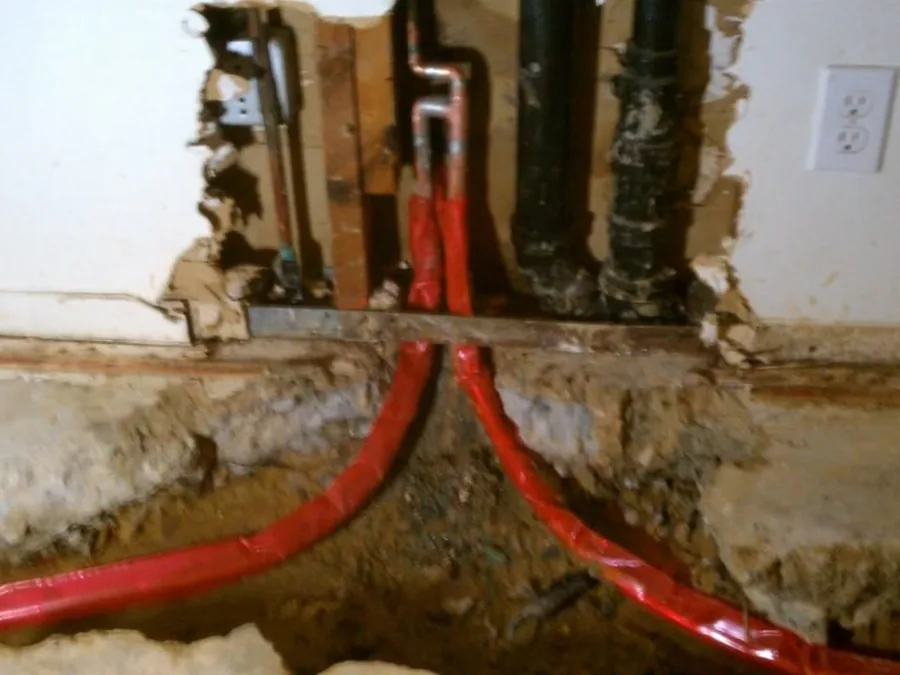
PEX is the more affordable option, and the difference comes from two places: the material costs less than copper, and the installation is faster. PEX is flexible, so it can be run in long continuous lengths that bend around corners, dramatically reducing the number of fittings and joints compared to rigid copper, which requires a soldered fitting at every direction change. Fewer fittings and faster runs mean fewer labor hours.
As a rough Glendora reference, a PEX repipe of a typical two-bathroom home runs in the range of 4,000 to 5,000 dollars, including the City of Glendora permit and drywall patching at access points. A comparable copper repipe typically costs noticeably more, often by several thousand dollars, driven by both the material price and the additional labor. Larger homes, multi-story homes, and homes with difficult access cost more in either material. We provide a firm written quote after assessing your specific home rather than working from a generic per-foot figure.
Lifespan and durability
Copper has the longer track record simply because it has been in use longer. Well-installed copper can last 50 years or more, which is exactly why so many Glendora homes are only now needing to replace the copper installed in the postwar decades. The catch is that copper is subject to pitting corrosion, the process that produces the pinhole leaks common in South Glendora's aging tract homes. Water chemistry, velocity, and temperature all influence how quickly that happens.
PEX has been used in U.S. residential plumbing since the 1980s and extensively since the 1990s and 2000s, with manufacturer ratings and field performance pointing to a 40-to-50-plus-year service life. Crucially, PEX does not corrode and is not subject to the pitting that causes copper pinhole leaks, so it sidesteps the exact failure mode that brings most Glendora homeowners to a repipe in the first place. PEX is also more freeze-tolerant than copper because it can expand slightly, though hard freezes are not a major Glendora concern.
How each handles Glendora's hard water
Glendora's water, supplied by the City of Glendora Water Department and Suburban Water Systems at 150 to 220 ppm hardness, is moderately hard. Over time, hard water deposits mineral scale on the interior of pipes. Copper's rigid interior can accumulate scale and, combined with certain water chemistries, contributes to the conditions that drive pitting. PEX has a smooth interior that resists scale buildup well and is chemically unreactive with the minerals in hard water, so it does not develop the same internal issues. For a hard-water area like Glendora, this is a meaningful point in PEX's favor over the long run.
Where copper still has the edge
To be fair to copper, it has genuine advantages worth weighing. It is rigid and holds its shape, which some homeowners prefer for exposed runs in a garage or utility area where appearance matters. It is impervious to UV light, so it can be run in sunlit locations where PEX would need protection. It has a multi-decade proven history. And some homeowners simply prefer a metal system for resale or personal preference. If those factors matter to you, copper remains a perfectly valid choice, just a more expensive one.
Which fits your Glendora house?
The house itself influences the decision. In a raised-foundation Glendora Village bungalow, PEX's flexibility makes crawl-space repiping faster and less disruptive to historic finishes, a strong fit. In a South Glendora tract home replacing pinhole-prone copper, PEX directly solves the failure mode that caused the problem. In a North Glendora custom estate with long runs and high simultaneous demand, either material works, and the choice often comes down to budget and homeowner preference. For exposed runs you want to look a certain way, a hybrid approach using copper in visible areas and PEX elsewhere is also possible.
Whatever material you choose, a proper Glendora repipe includes the City of Glendora Community Development plumbing permit, pressure testing of the new system, and drywall patching at access points. We walk every repipe customer through the material choice with their specific home, water, and budget in mind.
Get a Glendora repipe quote
If you are planning a repipe and want a clear, no-pressure comparison of PEX and copper for your specific home, we provide free written repipe estimates throughout Glendora. Learn more on our whole-home repiping page.